
What if better health started in a classroom?
During my recent visit to Sunbeam School, that question stopped feeling theoretical.
What I witnessed through Hands-On Health went beyond a typical classroom experience. It reflected an early, intentional intervention with the potential to reshape how health is understood, practiced, and carried across families.
The urgency is clear. In Ohio, about 1 in 3 children ages 10 to 17 face increased risk for long term health challenges. By the time many interventions begin, habits are already formed and patterns are difficult to disrupt.
Hands-On Health enters at a different point in that trajectory.
“Grounded in the expertise of pharmacist-led care and a food-as-medicine approach, its Health Science Labs bring disease prevention to life. Inside its Health Science Labs, students are not passively receiving information. They are actively engaging with it. They measure sugar content in drinks they recognize, analyze nutrition labels, and make real time connections between what they consume and how it affects their bodies.
As the co-founders, Dr. Jessica Macklin and Dr. Jennifer Macklin, PharmD, shared, “We don’t guess what communities need. We step outside of the clinic walls and see it for ourselves, then respond in ways that are practical for everyday life.”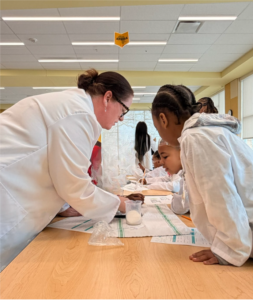
That approach is evident in the classroom.
More than 80 percent of students report trying new healthy foods such as fresh fruits and vegetables, and 90 percent report increased physical activity. These outcomes are not abstract. They reflect immediate, measurable changes in behavior.
What stayed with me most, however, was not the data. It was how quickly learning translated into action.
One student eagerly shared that she now reads nutrition labels and portions of her snacks based on serving size, encouraging her siblings and parents to do the same. In that moment, the reach of the program became unmistakable. The learning did not end when the class did. It extended into kitchens, influenced daily routines, and began shaping healthier decisions within the home.
That is where the impact expands.
Investing in What Works
Moments like these reinforce a broader truth about community health. Access to care matters, but it is only one part of a much larger equation.
Health is shaped well before a clinical visit, through everyday choices made in homes, schools, and neighborhoods, often within the constraints of cost, access, and time.
Hands-On Health operates within that reality.
By integrating nutrition education, STEM learning, and hands on engagement, the program does more than deliver information. It builds confidence and social emotional awareness students need to apply what they learn in ways that are practical and sustainable. The emphasis is not on perfection, but on informed decision making within real life circumstances.
That distinction is critical.
Sustainable change does not come from information alone. It requires relevance, consistency, and a sense of personal connection. It requires people to see themselves in the solution, and Hands-On Health meets students and families where they are while expanding what feels possible.
A Future Shaped by Early Action
Taken together, these moments point to something larger.
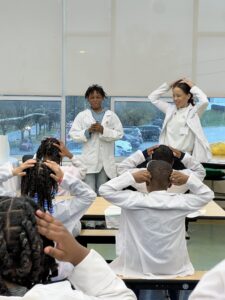
A student measuring sugar in a familiar drink. A conversation at the dinner table about portion sizes. A subtle shift in how a family approaches food. Individually, these actions may seem small. Collectively, they represent a meaningful shift in how health is understood and practiced.
At its core, this work is about mindset.
When young people begin to see themselves as active participants in shaping their own health, it changes how they think, how they make decisions, and how they show up in their daily lives. That shift does not remain contained. It moves outward, influencing family habits, reinforcing healthier norms, and contributing to stronger, more resilient communities across Cleveland.
This is the power of starting early.
Organizations like Hands-On Health are not only educating students; they are also empowering them. They are redefining what prevention can look like, what empowerment can feel like, and what becomes possible when young people are trusted with the tools to lead change in their own lives.