
I’ve been thinking a lot recently about Belonging and People Power, one of the foundation’s newly updated five strategies, that guide the work of the Saint Luke’s Foundation to advance towards health equity. My summer was book-ended by two outstanding conferences I attended on opposite sides of the country, each of which spoke to the importance and current relevance of our strategy. In May, at the Council on Foundation’s Building Together Conference in Seattle, I had the opportunity to learn about exciting work being done across the country to bridge and connect across differences, build belonging and organize around shared interests. In August, I had the privilege of joining approximately 3,000 participants from diverse backgrounds to explore ways to strengthen civic participation, foster a greater sense of belonging, and ensure that people have meaningful opportunities to shape the communities in which they live. This was at PolicyLink’s 2026 Summit in Washington, DC, titled We are the Founders: Writing the Unfinished Story of Our Democracy. 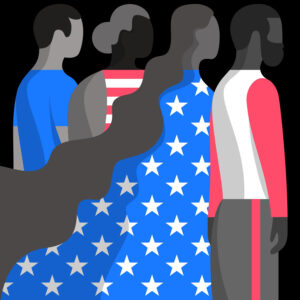
Many current circumstances make Belonging and People Power especially relevant at this time in history. Social isolation and loneliness, long on the rise and identified as contributors to health problems including heart disease, stroke, mental health issues, dementia, and premature death, were declared a public health epidemic just a few years ago by then U.S. Surgeon General Vivek Murthy (Our Epidemic of Loneliness and Isolation). Relatedly the Brookings Institutes shares, there has been a marked decline in recent decades “in the share of people who belong to committees and serve as officers of local groups, a trend that parallels declines in such forms of local political activity as attending school board meetings and participating in political parties.” At the same time, growing political polarization can make it more difficult for people with different perspectives and experiences to connect, find common ground, and work together toward shared goals.
Furthermore, it is now widely acknowledged that we are living in a time of increased political polarization, where so many issues lead quickly to “us” vs. “them” positioning, putting up barriers to connection, and making a more inclusive “we” feel elusive. At the same time, growing political polarization can make it more difficult for people with different perspectives and experiences to connect, find common ground, and work together toward shared goals.
With so much pointing to the importance of Belonging and People Power, I was particularly grateful to join with others this summer to explore approaches to support its development and identify key elements in this process. Intentional efforts to build these key elements were evident in the work of many organizations featured across both conferences: Trust, mutuality that allows for give and take, a willingness to listen deeply to one another, and common ground in shared values, identities or interests. In smaller groups or social settings, building these key elements as the basis for authentic relationships leads to a sense of belonging. When the common ground is a shared interest or problem at the broader community level, efforts to organize a collective response are often the result, leading to the cultivation of both Belonging and People Power. People naturally feel more powerful when they are supported by others and can see opportunities to work together towards a shared goal. Whether focused on more intimate interpersonal relationships or organizing around community change, these same qualities typify the work of many of our local strategy partners who align with our Belonging and People Power strategy.
I was interested to learn about the work of Citizen University at Building Together, especially as they have been doing work nearby in Akron for several years now. They host Civic Saturdays which incorporate several component activities: Readings on values or concepts related to our country’s founding along with reflections from local community; small group discussions where strangers and friends circle up to share thoughts on local issues and come up with ideas to make an impact; and enjoyment of food, music and art together. Citizen University also hosts what they call “long table potlucks”: Picture many dining tables and chairs lined up end-to-end in a large hall or on a closed off street, with neighbors bringing dishes to share and engaging in conversation guided by prompts such as “what formed you?” and/or “what broke you?” to ensure deeper listening and connection. 
The approach of Citizen University parallels many elements of Greater Buckeye Neighborhood Network Nights, hosted by our long-time strategy partner Neighborhood Connections. They include a shared meal and opportunities to connect; small group discussions focused on sharing ideas, concerns and/or plans for action; and the marketplace for exchanging resources. I try to attend monthly Neighborhood Network Nights as often as possible because it’s a great way build trust with residents, get to know local leaders, listen and learn what issues are on the minds of Greater Buckeye residents and stakeholders and what they hope to do to improve their neighborhood, and see people exercising interdependence through making requests, offers or declarations to their neighbors. In other words, I attend to see Belonging and People Power in action and seek out new opportunities for Saint Luke’s to support its further development.
Another organization I learned about at Building Together – whose name captured my attention as much as their work – is Warm Cookies of the Revolution. They engage people in civic conversations by incorporating arts activities, music and unusual attractions like low-riders and ice sculpting that make sure their events are fun and uniquely engaging. They describe themselves as functioning like a civic health club, where people can exercise their civic muscles and build skills and discipline around being civically engaged. Their work with local creatives to hold truly engaging events made me think of the local work of our strategy partner, Cleveland VOTES, who has been working with local creatives to engage residents civically for several years now. Their current More Than My Art (MTMA) Initiative brings together creatives and community organizers to explore innovative approaches to civic engagement, strengthen community advocacy skills, and use art and creative expression to encourage greater participation in issues that matter to residents.
In addition to incorporating arts into their events, the central focus of Warm Cookies of the Revolution is simply making time and space for people to get to know each other and build trust. Co-Director, Adrian Molina, made the point – during a Building Together plenary session – that we’re currently in a time in history when “we need to practice being human together.” Building trust, practicing relational skills and finding common ground across difference were also mentioned often at the PolicyLink Summit in the context of preparing to ensure that democracy works for everyone. Another common theme was the use of music and other forms of art to bring people together and spark joy. Michael McAfee, CEO of PolicyLink, noted “We need joy to be prepared for the work,” when it pertains to our democracy.
What resonated most with me at the PolicyLink Summit was the opportunity to reflect on our nation’s history, the enduring principles expressed in our founding documents, and the role that individuals and communities can play in strengthening civic life. The experience encouraged participants to consider how trust, collaboration, and meaningful participation can contribute to a future in which more people feel connected, heard, and valued. The Summit offered a series of important lessons about pivotal moments in our nation’s history when significant strides were made towards realizing the ideals set forth in our founding documents 250 years ago, a deep dive on our constitution and particularly the fourteenth amendment with its promises of equal protection, inspiring visions from powerful and diverse leaders, and an opportunity to work in teams or “delegations” to envision together the future we want for our nation. Among the ideas shared by participants, I was particularly inspired by conversations about expanding opportunity, strengthening economic security, and creating communities where people have the resources and support, they need to thrive. As one member of my delegation put it, “there’s enough for everyone and everyone is enough.” I left the Summit with a renewed appreciation for our shared humanity and the importance of listening, collaboration, and community participation in shaping a stronger future for everyone.
There’s so much more I could share about my conference takeaways, as well as the excellent work being done by many of our strategy partners here in Cleveland. Above all, these experiences reminded me that building a stronger sense of belonging begins with listening to one another, recognizing our shared interests, and creating opportunities for everyone to participate.
At Saint Luke’s Foundation, we believe the perspectives and experiences of residents are essential to understanding what makes a community a place where people feel connected, valued, and supported.
We want to hear from you. Visit LEV216.org to answer a few brief questions about what belonging means to you and how we can strengthen connections in the Buckeye-Shaker, Woodland Hills, and Mount Pleasant neighborhoods. Whether your experiences are like or different from those of your neighbors, your perspective matters. Our goal is to listen, learn, and better understand the opportunities, challenges, and aspirations of the communities we serve.
In the coming weeks, we look forward to sharing what we hear, continuing the conversation, and highlighting the organizations and initiatives working to foster Belonging and People Power across our neighborhoods.